For centuries, mined gemstones were considered the only standard for milestone heirlooms, despite the immense ecological toll of open-cast mining and uncertain supply lines. Today, forward-thinking buyers expect fine jewellery to mirror the clean craftsmanship of modern architecture. From coastal creative studios to boutique private ateliers, style leaders are visiting showrooms for lab grown diamonds Sydney designers celebrate, discovering ethical heirlooms that balance brilliance with environmental respect.
This movement is reshaping how we evaluate genuine luxury. As documented in contemporary material guides, these precision-engineered gems, often noted for why modern diamonds are called lab grown diamonds, deliver identical carbon crystallization without terrestrial habitat destruction. Below, we examine the physics of crystal growth, design parallels between architectural woodwork and fine jewellery, and a practical buying framework.
The Science of Crystallization: Pure Carbon Architecture
To evaluate these stones with gemological confidence, one must understand their atomic structure. A laboratory-grown diamond is not a simulant like cubic zirconia or moissanite. Scientifically, physically, chemically, and optically, it is genuine diamond in every sense of mineral physics.
Every diamond crystal consists of pure carbon atoms organized in an isometric-hexoctahedral lattice. Each carbon atom forms tight covalent bonds with four neighbors, producing unmatched hardness (10 on the Mohs scale), a refractive index of 2.417, and an optical fire dispersion of 0.044. Advanced facilities replicate subterranean mantle forces through two precise engineering methods:
- Chemical Vapor Deposition (CVD): A razor-thin diamond wafer is housed inside an ultra-high vacuum reactor injected with hydrocarbon gases like methane and hydrogen. When activated by microwave plasma, the carbon molecules detach and precipitate onto the substrate atom by atomic layer, forming ultra-pure gem crystals.
- High Pressure High Temperature (HPHT): Utilizing heavy hydraulic presses that generate pressures above 55,000 atmospheres and heat exceeding 1,500 degrees Celsius, pure graphite dissolves in a catalytic metal flux and recrystallizes around a seed diamond, recreating natural subterranean conditions cleanly.
Independent gemological bodies—including the Gemological Institute of America (GIA) and the International Gemological Institute (IGI)—grade both lab and mined stones under the exact same 4Cs framework: Cut, Clarity, Color, and Carat weight.


Material Comparison: Engineered Gems vs. Extracted Stones
Understanding how cultivated diamonds compare with mined minerals and synthetic simulants helps buyers select heirlooms built to last generations:
| Comparative Parameter | Laboratory Cultivated Diamond | Earth-Mined Diamond | Diamond Simulant (Cubic Zirconia) |
|---|---|---|---|
| Chemical Composition | 100% Pure Carbon (C) | 100% Pure Carbon (C) | Zirconium Dioxide (ZrO2) |
| Mohs Hardness | 10.0 (Lifetime Durability) | 10.0 (Lifetime Durability) | 8.0 – 8.5 (Prone to Abrasions) |
| Refractive Index | 2.417 (Authentic Fire) | 2.417 (Authentic Fire) | 2.15 – 2.18 (Dull Sparkle) |
| Light Dispersion | 0.044 (Crisp Scintillation) | 0.044 (Crisp Scintillation) | 0.060 (Rainbow Glare) |
| Environmental Origin | Zero Earth Excavation | Heavy Open-Pit Land Removal | Factory Mass Manufacturing |
| Traceability | Documented from Growth to Polish | Often Fragmented Across Global Borders | Mass Synthesized |
Design Parallels: Sustainable Timber and Conscious Jewellery
There is a natural design connection between responsible architectural timber and ethical jewellery. Both disciplines celebrate organic warmth, durable balance, and tactile honesty:
1. Structural Integrity and Longevity
Just as seasoned architectural timber provides lifelong structural strength, a diamond delivers unmatched mineral resilience. Choosing sustainable stones set in recycled 950 platinum or 18k gold guarantees that an engagement ring withstands decades of active daily wear without losing its brilliance.
2. Honest Provenance
Modern consumers examine timber certifications (like FSC standards) to ensure their materials do not accelerate deforestation. Similarly, choosing lab-cultivated stones guarantees that an heirloom caused zero river contamination, mountain displacement, or community disruption.
3. Minimalist Architectural Settings
Clean structural lines dominate contemporary bridal design. Rather than fragile, busy multi-prong clusters, designers favor sleek bezel settings, architectural knife-edge bands, and low-profile baskets that sit flat against the hand, highlighting the natural proportions of the gem.
Sydney’s Coastal Aesthetics: The Modern Australian Lifestyle
In vibrant lifestyle hubs like Sydney, fine jewellery design reflects an active outdoor routine. Contemporary couples look for pieces that shift smoothly from coastal beach walks to creative design boardrooms:
- Low-Profile Bezel Mounts: Enclosing the diamond’s edge in a protective collar of solid gold shields the girdle from unexpected knocks while eliminating snagging hazards on fabrics or active wear.
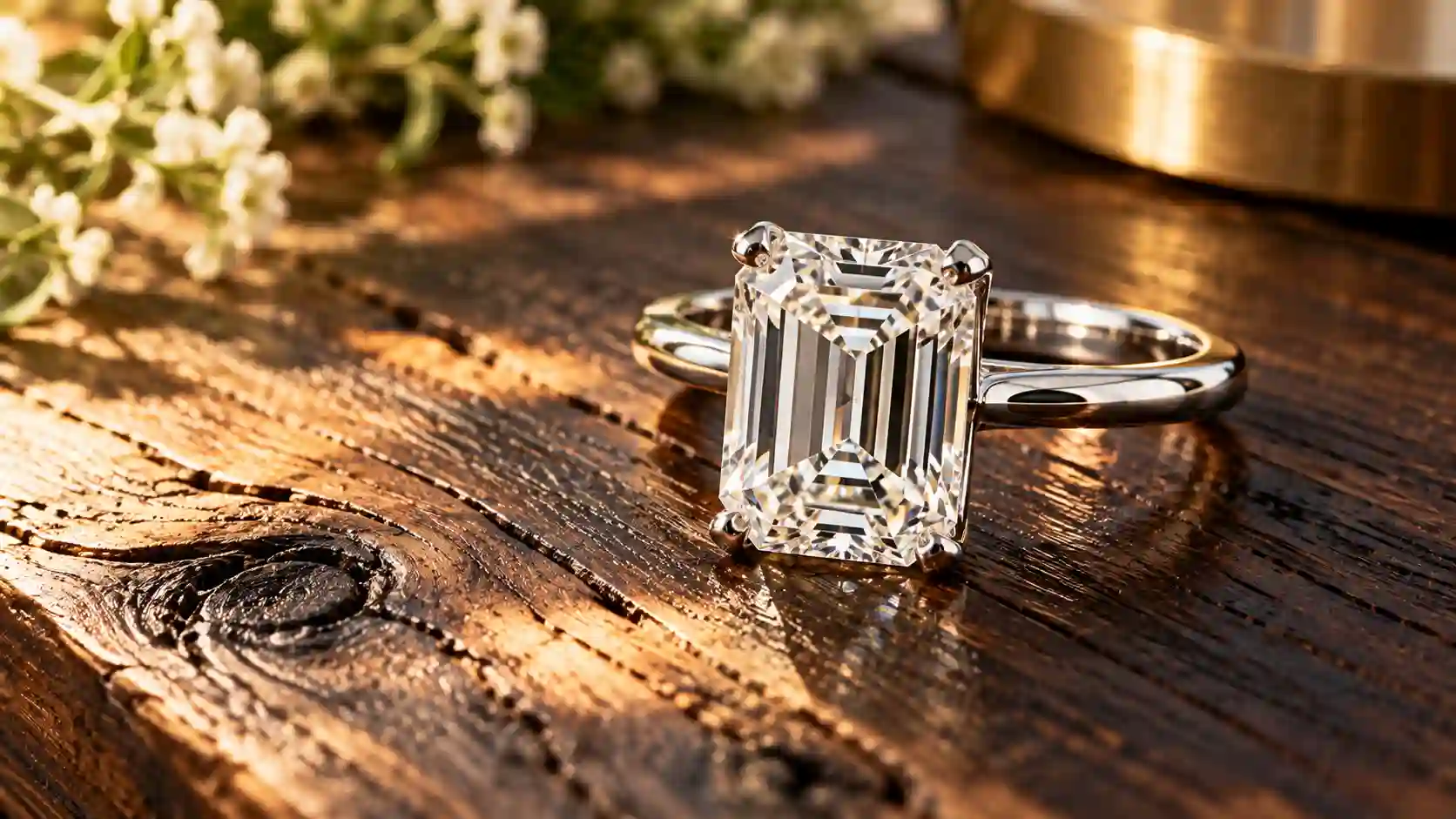
- Elongated Geometries: Fancy cuts—such as emerald, radiant, and oval shapes—accentuate the finger’s natural lines and deliver contemporary character.
- Solid Recycled Precious Metals: Pairing brilliant stones with warm recycled yellow gold creates a relaxed, sun-kissed aesthetic suited to Australian coastal living.
A Buyer’s Checklist for Selecting Lab-Grown Diamonds
To choose your custom piece with confidence, follow these four proven gemological steps:
- Prioritize Cut Grade First: The cut controls how effectively a stone reflects ambient light. Always choose an “Ideal” or “Excellent” cut grade; an expertly cut stone looks whiter, brighter, and larger than a poorly proportioned stone of higher clarity.
- Target Eye-Clean Clarity: Avoid paying unnecessary markups for flawless grades. Stones graded VS1 or VS2 are completely clean to the naked human eye under daily lighting.
- Align Color with Metal Choice: For cool platinum or white gold mounts, select colorless grades (D, E, F). For warm yellow gold settings, near-colorless grades (G, H, I) appear crisp and white while offering excellent budget efficiency.
- Verify Independent Certification: Ensure your diamond comes with an independent grading certificate from accredited laboratories such as IGI or GIA, matching the micro-laser inscription etched directly on the stone’s girdle.
Conclusion: The Future of Sustainable Heirloom Luxury
True luxury today is defined by integrity, purpose, and deliberate design. A fine piece of jewellery should stand for timeless commitment while respecting the environment we share.
By blending advanced crystal science with sustainable hand-craftsmanship, lab-grown diamonds provide a brilliant, responsible, and permanent path forward. Selecting an ethical diamond ensures your personal milestone shines with pride, authenticity, and enduring elegance for generations to come.